Penguinpedia
Discover every penguin species on Earth — from the towering Emperor to the tiny Little Blue — in an immersive, scientifically accurate journey across ice, ocean and time.
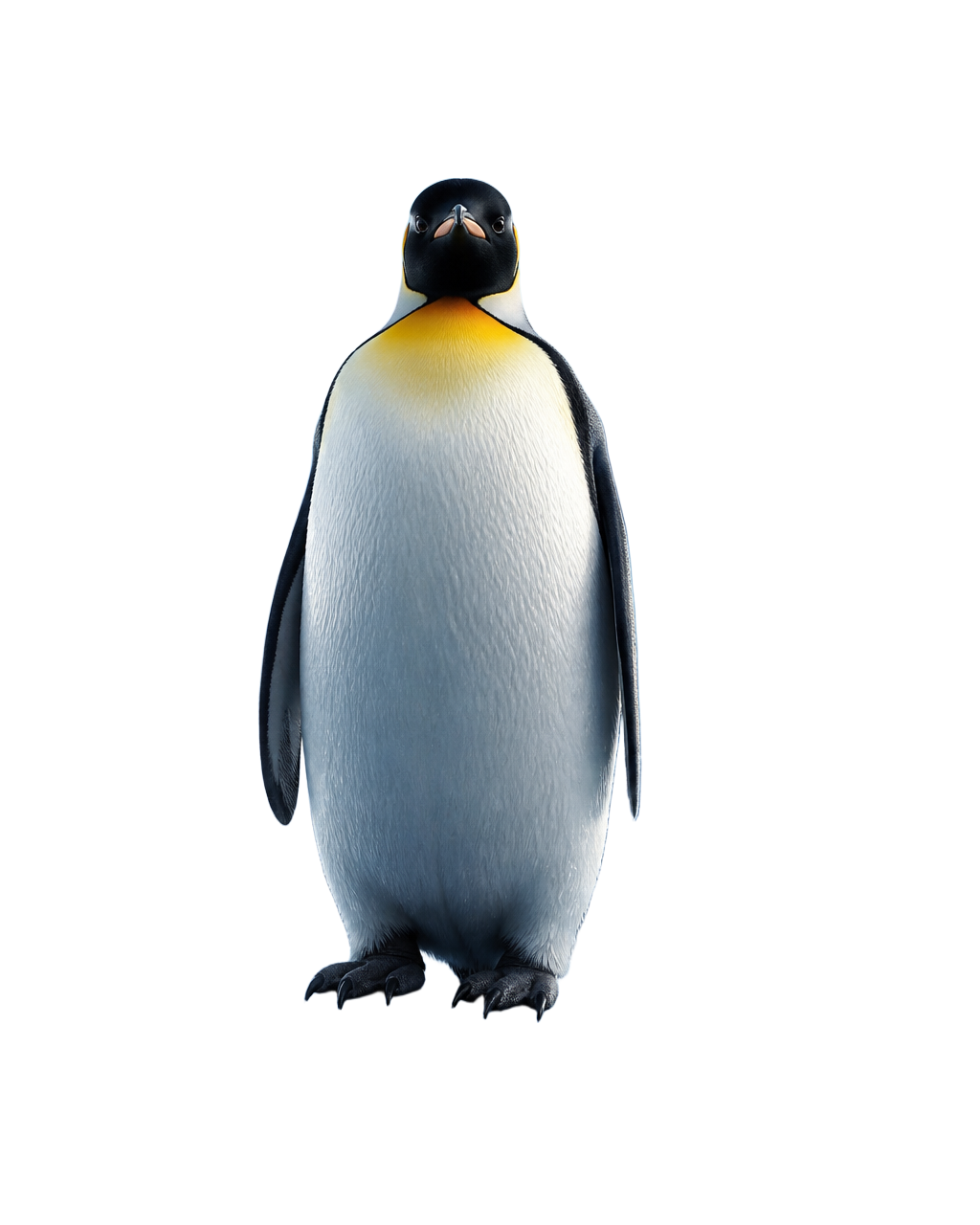
Elegant survivors of the Southern seas
Every penguin species alive today evolved from a single flightless ancestor around 60 million years ago. Here's what makes them extraordinary.
Flightless birds
Penguins traded flight for swimming ~60 million years ago. Their solid bones and paddle-like wings make them expert underwater fliers.
Built for the sea
Streamlined bodies, dense plumage and powerful flippers let penguins chase prey at over 30 km/h and dive for many minutes.
Warmth engineering
Layered feathers, blubber and heat-exchange in feet keep them warm from Antarctic winters to equatorial sun.
Ocean hunters
Diet ranges from krill and squid to schooling fish. Salt glands let them drink seawater without harm.
Raising chicks
Most species take turns fasting on the nest for weeks. Emperor dads incubate their egg on their feet all winter.
Social & vocal
Colonies of thousands recognise mates and chicks by voice alone across a wall of noise.
Predators
Leopard seals, orcas and sea lions hunt at sea; skuas and gulls target eggs and chicks on land.
Conservation
Climate change, overfishing and pollution threaten most species — but conservation is working, one colony at a time.
Every penguin, up close
Filter, search and expand any card to discover height, weight, habitat, adaptations and fascinating facts.
Species side by side
Compare two penguins across size, speed, diving ability and more.
The tallest and heaviest living penguin.
Smallest penguin in the world.
Where penguins live
Every dot is a breeding range. Click a point to reveal the species.
60 million years of evolution
From dinosaur-era ancestors to modern-day conservation icons.
First Penguins
The earliest known penguins, like Waimanu, appear in New Zealand just after the age of the dinosaurs.
Age of Giants
Species like Kumimanu and Palaeeudyptes stand up to 1.8 m tall and weigh over 100 kg.
Modern Lineages Emerge
Ancestors of today's genera diverge across a cooling Southern Hemisphere.
Ice Ages
Repeated glaciations shape modern penguin ranges around Antarctica and Sub-Antarctic islands.
Post-Glacial Colonisation
As ice retreats, colonies expand across the modern polar and temperate coasts we see today.
Human Exploitation
Explorers, whalers and sealers harvest penguins for oil, eggs, and guano.
Conservation Era
Antarctic Treaty, marine protected areas and rehab centres work to safeguard all 18–20 living species.
Built for water, ice and wind
Hover any label to learn how each body part works.
A closer look
Sharp, hooked beaks help grip slippery prey. Backward-pointing spines on the tongue keep fish from escaping.
From egg to breeding adult
The journey of every penguin, told in six stages.
Incubated on feet or in a nest for 30–65 days depending on species.
Chick pips open the shell using an egg tooth after several days of effort.
Downy and fully dependent on parents; huddles in a crèche for warmth.
First waterproof plumage develops. First swim marks independence.
Learns to hunt at sea; may travel thousands of km before returning to breed.
Returns to natal colony to court, pair up, and raise the next generation.
How deep can a penguin dive?
Slide down into the ocean and watch which species can follow you.
Sharper than you'd think
Penguins solve problems, remember individuals, and navigate entire oceans.
Return to the same nest, mate and stone collection year after year.
Use the sun, stars and Earth's magnetic field to travel oceans.
Complex calls carry individual signatures over noisy colonies.
Have been observed using tools like pebble arrangements and shelter selection.
Parents pick out their chick's voice among thousands.
Reunited pairs perform elaborate greeting ceremonies.
Engineering by evolution
Every feather, bone and vessel is tuned for a life split between ocean and ice.
Dark backs blend with the deep, white bellies with sunlit surface.
Oil from a preen gland keeps plumage watertight.
Solid bones reduce buoyancy for efficient diving.
Thick blubber layer conserves heat and fuels fasts.
Torpedo shape reduces drag underwater.
Modified wings powered by giant chest muscles.
Excrete excess salt from seawater above the eyes.
Countercurrent blood flow keeps feet just above freezing.
Penguins beyond Antarctica
Every continent south of the equator (and one island group on it) has penguins.
Home to Emperor, Adélie, Chinstrap and Gentoo penguins.
The sub-Antarctic capital of King and Macaroni colonies.
Five breeding species including Gentoo and Rockhopper.
Humboldt and Magellanic penguins along cold currents.
Little Blue Penguins parade at Phillip Island each night.
Fiordland, Snares, Yellow-eyed and Little Blue — a hotspot.
African penguins nest at Boulders Beach near Cape Town.
The only penguin species living at the equator.
The pressures penguins face
Nearly two-thirds of penguin species are declining. These are the main drivers.
Sea-ice loss threatens Emperor and Adélie colonies.
Industrial fisheries compete for krill and forage fish.
A single spill can devastate entire colonies overnight.
Found in penguin stomachs on the world's remotest islands.
Cats, dogs, rats and stoats decimate island colonies.
Coastal development and disturbance shrink nesting areas.
Reasons for hope
From SANCCOB's oiled-bird rescues to marine protected areas around Antarctica, conservation is working.
Coordinates seabird conservation and Red List assessments.
Rehabilitates thousands of oiled African penguins each year.
Runs research and community-led coastal conservation.
Protects the Southern Ocean's ecosystems.
Restores nesting habitat in New Zealand.
Runs long-term Antarctic penguin monitoring since 1994.
How you can help
Choose sustainable seafood, reduce single-use plastics, support marine conservation NGOs, and vote for climate action. Small actions ripple through the ocean.
The penguins of Earth, by the numbers
Live charts drawn from the species database.
Test your penguin knowledge
20 randomised questions. Earn a badge based on your score.
Emperor Penguins can dive over…
Tell me a penguin fact
One click, one of 154+ facts. Keep pressing.
"Penguins are birds — but they use their wings as flippers instead of for flight."